Setting financial goals is the foundation of building lasting wealth and financial security. Without clear goals, it's easy to let day-to-day expenses consume your income, leaving little for the things that truly matter.
This guide walks through the Financial Goals Worksheet—a simple tool designed to help you identify, prioritize, and create actionable plans for your financial goals.
A financial goals worksheet helps you move from vague wishes to concrete plans. Instead of just thinking "I should save more," you'll define specific goals with timelines, costs, and step-by-step actions.

This file consists of a single worksheet with seven essential columns:
The template includes two practical examples that show exactly how to complete each column.
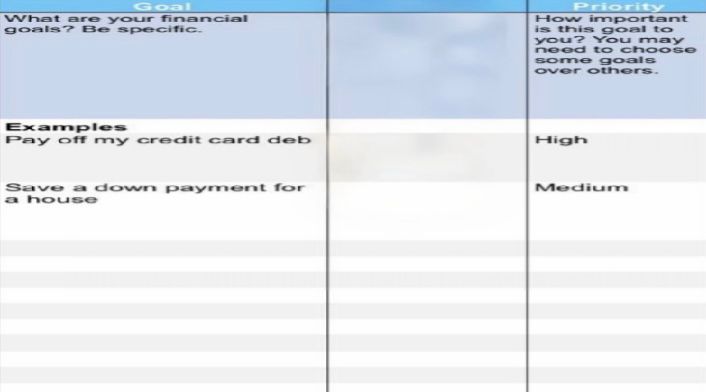
Caption: Start by listing your financial goals in the first column, then mark each as High, Medium, or Low priority. Be specific—instead of "save money," write "save for a down payment on a house."
Think broadly about what you want to achieve financially. Common categories include debt repayment, major purchases, savings goals, and investment goals. Write each goal on its own row, then assign a priority to help you focus your time and money where they matter most.
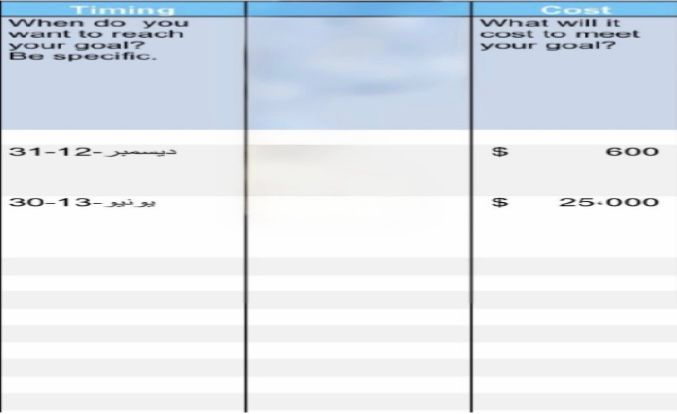
Caption: Assign a target date for each goal and research exactly how much it will cost. For a down payment, this might be a specific percentage of home prices in your area.
For each goal, enter a realistic target date. The example shows "2012-12-31" for paying off credit card debt and "2013-06-30" for saving a down payment. Then determine the total amount you need through research—check debt statements, research home prices, or use online calculators for retirement.
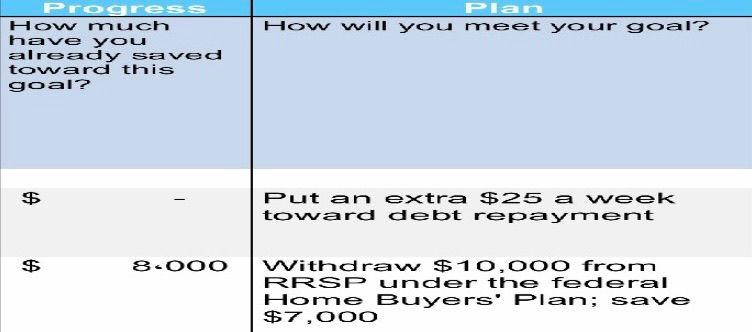
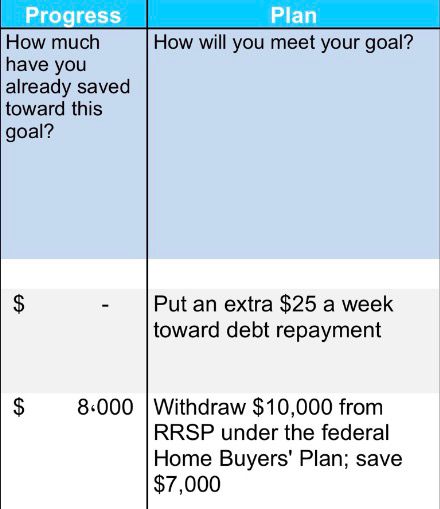
Caption: Record what you've already saved, then outline your strategy. The example shows using the Home Buyers' Plan and saving tax refunds toward a down payment.
For each goal, enter the amount you've already saved or paid down. This shows your starting point and helps you understand what's left to accomplish. Then outline your strategy, which might include specific monthly savings amounts, using government programs, redirecting windfalls like tax refunds, or increasing your income through side work.
Caption: Break your plan down into specific actions you can take regularly—like packing lunch instead of eating out or making coffee at work instead of buying it.
This is the most important step because it turns your plan into reality. Ask yourself what you'll actually do differently starting tomorrow. The examples show powerful small actions like packing two lunches a week instead of eating out, making coffee in the office, continuing RRSP contributions, getting a roommate to save on rent, and scaling back spending on clothing and gifts. These small actions compound over time to create significant progress.
The template includes two excellent examples that show how to think through financial goals:
Example 1: Pay off credit card debt
Example 2: Save a down payment for a house
These examples demonstrate that meaningful goals often require multiple strategies and consistent small actions.
How many goals should I have?
There's no magic number, but focus on your top priorities. Three to five meaningful goals is manageable for most people.
What if my goals conflict?
This is where priority matters. If you have to choose between a high-priority goal and a medium-priority goal, the high-priority goal wins.
How often should I update this worksheet?
Review it at least monthly. Some people find weekly reviews helpful for staying on track with daily actions.
What if I don't meet my target date?
That's okay. Life happens. Adjust your timeline and keep going. The important thing is consistent progress, not perfection.
Can I use this for family goals?
Absolutely. This is a great tool for couples or families to discuss and agree on financial priorities together.

Achieving financial goals isn't about making huge sacrifices or dramatic changes. It's about clarity, planning, and consistent small actions over time. This Financial Goals Worksheet gives you the structure to define what matters most and create a realistic path to get there.
Download the template, set aside an hour, and start mapping out your financial future. The examples will guide you, and your completed worksheet will become your roadmap to financial success.
Download your template:
Download Excel Template