Launching a new business is an exciting journey, but it comes with significant financial challenges. One of the most common reasons startups fail is running out of money before becoming profitable. That's why understanding and planning your startup costs is essential.
This guide walks through the Start Up Expenses Worksheet—a practical tool designed to help entrepreneurs estimate both one-time startup costs and ongoing monthly expenses before launching.
A startup expenses worksheet helps you identify and calculate all the costs associated with launching your business. It separates one-time expenses (things you pay once to get started) from monthly expenses (ongoing costs to operate), then calculates the total funding you'll need to launch and sustain your business until it generates steady revenue.

This simple but powerful worksheet includes:
The template provides space for amounts and notes, helping you document your assumptions.
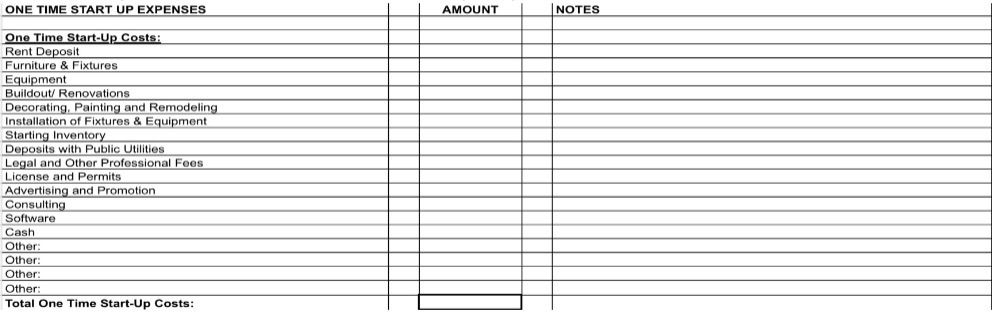
Caption: List every cost required to open your business—from rent deposits and furniture to licenses and initial inventory. Add notes to document your estimates.
Work through each line item and estimate what you'll need. Common one-time costs include:
For each item, enter the amount in column C and add notes in column E explaining how you arrived at the estimate. The total automatically calculates at the bottom.
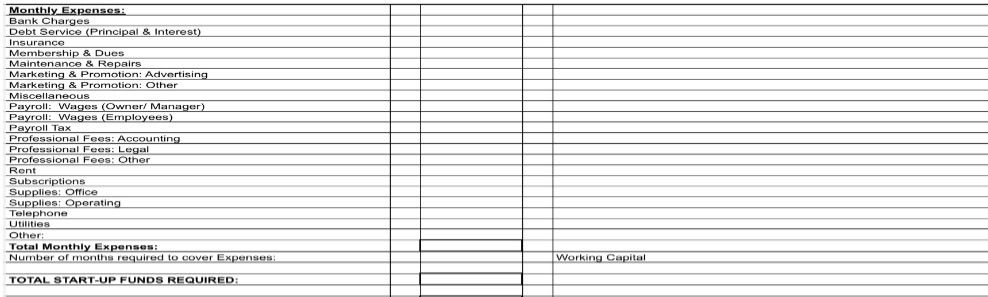
Caption: Project your ongoing monthly costs including payroll, rent, utilities, and professional fees. Be realistic about what it takes to operate each month.
Next, estimate your ongoing monthly expenses. These are costs you'll pay every month regardless of revenue:
Again, enter amounts in column C and use column E for notes. The template calculates your total monthly expenses automatically.
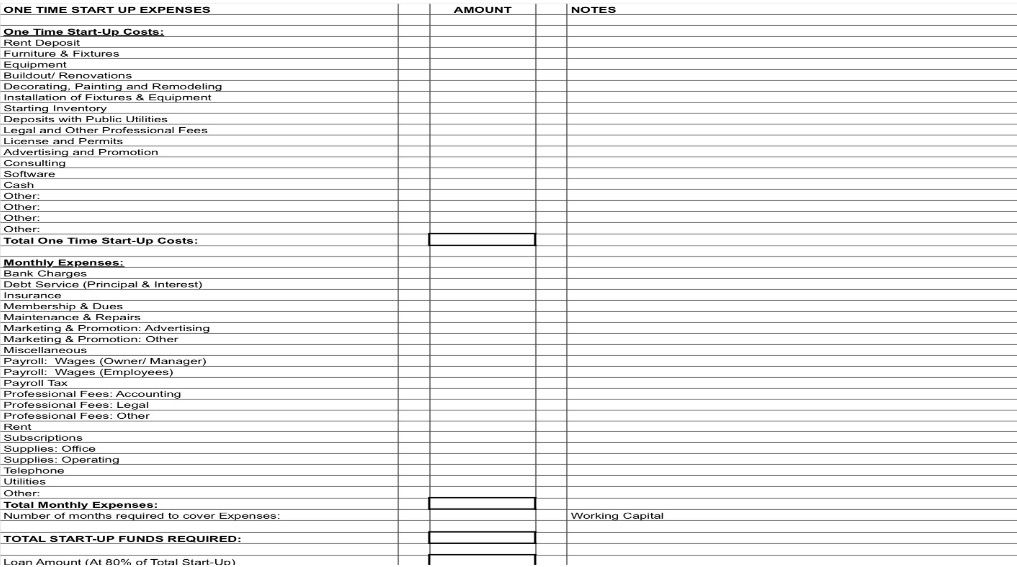
Caption: Determine how many months you'll need to cover expenses before revenue starts. This working capital plus one-time costs equals your total startup funds required.
In the "Number of months required to cover Expenses" field, enter how many months you expect to operate before your business generates enough revenue to cover its costs. This could be 3, 6, 12 months or more depending on your business type.
The template multiplies your monthly expenses by this number to calculate your working capital needs.
Finally, it adds your one-time costs and working capital to show your TOTAL START-UP FUNDS REQUIRED.
As a helpful guide, the template also calculates a suggested loan amount at 80 percent of your total needs.
Working capital is the money you need to keep the business running until it becomes profitable. Many new business owners focus only on one-time startup costs and forget that they'll need cash to pay rent, salaries, and bills for months before significant revenue arrives.
This template ensures you don't make that mistake.

Use the blank "Other:" rows to add any expenses specific to your business. The template includes several blank lines for this purpose.
This depends on your business type. Retail businesses might need 3-6 months, while product-based businesses might need 12-18 months to develop, manufacture, and sell. Research industry benchmarks and be conservative.
Yes, if you plan to pay yourself. Include owner/manager wages in the Payroll section. If you're not taking a salary initially, be realistic about how long you can go without pay.
Inventory appears in two places. Starting inventory is a one-time cost. Ongoing inventory purchases would be part of monthly operating expenses.
It's a general guideline. Some entrepreneurs fund the remaining 20% through personal savings, investors, or other sources. Consult with lenders about your specific situation.
Starting a business requires careful financial planning. This Start Up Expenses Worksheet gives you a clear picture of what you'll need before you open your doors and how much working capital you'll require to survive until your business thrives.
Download the template, work through each line item honestly, and use the resulting total to guide your funding strategy. Your future self will thank you.
Download your template:
Download Excel Template